Guide · 12 minute read
How to Navigate, Negotiate and Succeed at the Canton Fair
A field guide for preparing, finding relevant suppliers, and turning brief booth conversations into properly verified manufacturing relationships.
01
Overview and 2026 Dates
The Canton Fair—formally the China Import and Export Fair—is held at the Canton Fair Complex in Guangzhou. The official site lists 32,000 exhibitors for 2026, spread across three product phases. For fashion, footwear, textiles, bags, and accessories, Phase 3 is usually the relevant starting point.
The dates below are the official spring and autumn 2026 dates. Always check the current official schedule before booking travel because future sessions can change.
Phase 1
April 15–19 and October 15–19
Electronics, machinery, vehicles, hardware, tools, energy, chemicals, and building materials.
Phase 2
April 23–27 and October 23–27
Consumer goods, housewares, gifts, home decoration, furniture, and building or bathroom products.
Phase 3
May 1–5 and October 31–November 4
Apparel, textiles, footwear, bags, accessories, sports goods, personal care, food, and related categories.
02
Registration and Entry Requirements
Start with the official Buyer Service System. First-time overseas buyers create an account, complete their company and personal information, and apply for an overseas buyer badge. The system can also generate a Canton Fair invitation when requested during the application flow.
Do not assume that every attendee needs the same visa—or that an invitation guarantees one. Entry and visa rules depend on your passport, residence, itinerary, and current Chinese policy. A Canton Fair invitation can support an application when one is required, but the responsible Chinese embassy, consulate, or visa centre decides what documents and visa category apply.
Use accurate information
Solo founders and small brands can attend, but registration and visa forms should describe the real person or business. Do not invent a company, title, or travel purpose. If your situation is unusual, ask the official buyer service and your local Chinese visa authority before paying for non-refundable travel.
What to pack
Comfortable shoes
Expect long days and substantial walking across the complex.
Smart-casual clothing
Dress professionally, but prioritize comfort and the weather.
Power bank
Keep your phone available for translation, maps, notes, and contact exchange.
Business cards
Bring enough for suppliers and write a note after each conversation.
Phone or camera
Document products only after asking the exhibitor for permission.
Lightweight bag
Carry water, notes, cards, and samples without overpacking.
Phone preparation
Install and test the communication, payment, map, and translation tools you plan to use before departure. WeChat is common for supplier follow-up, and an offline translation option is useful when connectivity is unreliable. Confirm that your payment tools work with your cards and account region.
03
Planning Your Trip
A focused buyer rarely needs to walk every hall for all five days. Three or four well-planned days can be enough for one phase, but the highest-value work often happens afterward: organizing leads, visiting shortlisted factories, and agreeing on a clear next step.
If factory visits are part of the trip, leave several flexible days after the fair. Suppliers may be in different cities or provinces, and travel time can be significant.
01Before the trip
Start at least 4–6 weeks ahead
- Confirm the correct entry or visa requirements for your passport and residence.
- Pre-register, apply for the appropriate buyer badge, and request an invitation if needed.
- Choose the phase and product categories that match your sourcing brief.
- Prepare a concise company introduction, target quantities, timeline, and product requirements.
02At the fair
Usually 3–4 focused days
- Shortlist specialists instead of trying to visit every booth.
- Record the contact, booth number, product specialty, MOQ, and next action immediately.
- Ask permission before taking photos and exchange the supplier's preferred contact method.
03Immediately after
Within 1–2 days
- Rank leads while the conversations are still fresh.
- Send a specific follow-up that references the product and next step you discussed.
- Arrange visits with the strongest candidates when geography and timing allow.
04Factory visits
Allow several additional days
- Verify the production site, sample room, quality process, machinery, and available capacity.
- Meet the people who would handle development and production—not only the sales contact.
- Do not place an order solely because a booth or factory visit looked impressive; complete normal due diligence.
04
Venue and Layout
The fair is held at the China Import and Export Fair Complex, 382 Yuejiang Middle Road, Haizhu District, Guangzhou. It is a very large venue with multiple areas and exhibition halls.
Hall assignments can change between sessions, so this guide does not preserve the legacy page's old hall-number map. Use the current floor map and exhibitor search in the official Buyer Guide, then save the relevant halls and booths before arriving.
Build a route, not a wish list
- Group target exhibitors by hall or area so you are not crossing the complex repeatedly.
- Mark must-see suppliers separately from optional discovery booths.
- Leave gaps for conversations that run long and for unplanned referrals.
- Record the exact booth number with every contact; company names alone are easy to confuse later.
05
Which Booths to Approach
The fair is too large to evaluate every booth. Start with specialists whose displayed products, materials, and construction resemble what you intend to make.
Trading companies are not automatically bad: some add useful sourcing, logistics, communication, or category-management services. The important question is whether you understand who actually produces the goods, what the intermediary controls, and what value the additional layer provides.
Signals to investigate
- The booth offers unrelated product categories but cannot explain where or how they are made.
- Answers about materials, machinery, capacity, quality control, and production location stay vague.
- The team cannot show credible production evidence or explain who would manage development.
- Company details, export documents, quotations, and payment instructions do not align.
Useful manufacturer signals
- A clear specialty, supported by detailed technical knowledge and coherent samples.
- Specific answers about materials, machinery, sampling, quality control, lead times, and capacity.
- Willingness to explain the production site and discuss a visit when operationally possible.
- A documented process for quotations, samples, revisions, approvals, production, and inspection.
These are screening signals, not proof. Verify company registration, references, samples, payment details, production capability, and quality systems before committing money or intellectual property.
06
Building Supplier Relationships
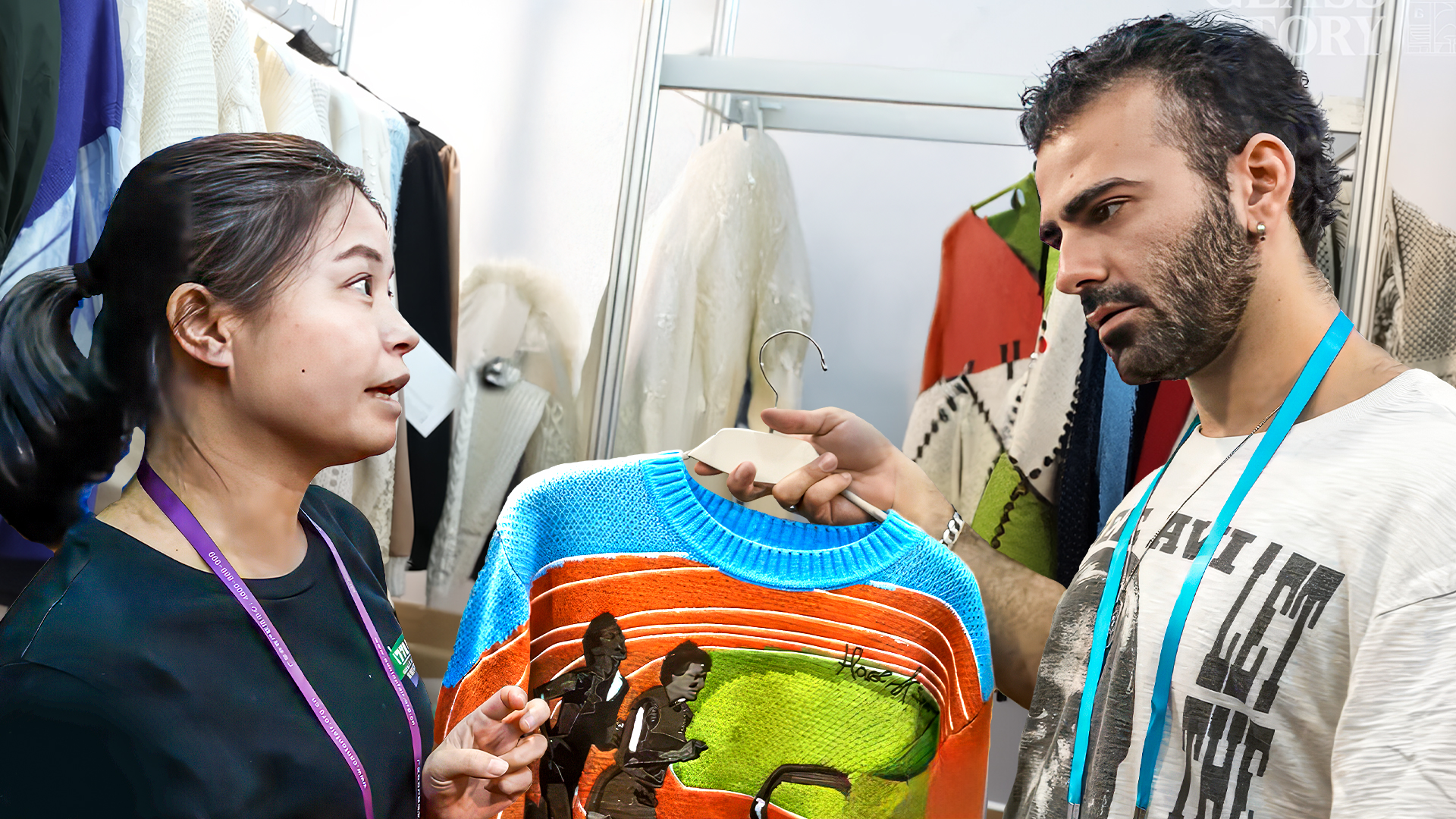
Lead with respect and clarity. Explain who you are, what you are developing, the likely quantities, the quality level, and the timing without pretending to be larger than you are. A credible brief is more useful than inflated promises.
Treat the booth conversation as the beginning of qualification—not the moment to force a final price. First establish whether the supplier can make the product, communicate reliably, and support the next development step.
Ask smart questions
- “What product types and materials are you strongest in?”
- “Do you develop new designs, or only reproduce existing samples?”
- “What are your sample and production minimums?”
- “What is the usual lead time from approved sample to production?”
- “Which processes are in-house, and which are subcontracted?”
- “How do you control quality during and after production?”
- “Can we visit the production site after the fair?”
Take structured notes. Record the booth, person, specialty, MOQ, timing, and agreed next action. Ask before photographing products or people.
Follow up with context. Send a message while the meeting is still fresh, referencing the exact product and next step.
Prepare usable specifications. If the supplier is promising, send a clear brief or use our factory-ready techpack guide before requesting a serious quotation.
07
Gifts and Factory Visits
A small gift can be a thoughtful gesture during a later factory visit, especially when a host has arranged transport or spent significant time with you. It is optional—not a requirement for doing business—and should never be used to influence a commercial decision.
Keep gifts modest, culturally appropriate, easy to transport, and permitted by both companies' policies and customs rules. Avoid expensive items, cash equivalents, and anything that could create an obligation.
Simple ideas
- A small, locally made item from your region
- Tea, coffee, or packaged food that travels well and clears customs
- A visual book about your city or country
- A modest branded item connected to your company
- A printed photo from your meeting, delivered during a later visit
08
Food and Daily Logistics
Fair days are long. Eat before the busiest part of the day, carry water, and plan meal breaks instead of waiting until every nearby option is crowded. On-site choices and opening hours can change, so check the current attendance guide and ask your hotel or local contacts for practical alternatives.
Leave extra time for security, badge collection, transit, and walking between halls. At the end of each day, back up photos and notes, label every lead, and decide the next morning's priority route before you stop working.